The "Harding Memo" Paper Chase
25 years ago, Andrew Carboy was catching a subway train to his office at 120 Broadway. He had a deposition at noon in Brooklyn, but decided to stop by the office on the way.
The trains weren't running because of a transformer explosion or a fire, people at the station were telling him. When Carboy climbed up the stairs to walk the rest of the way, "it looked like there was a thundercloud overhead, but it was really low," he said.
It was September 11, 2001 and the first tower had just been hit.
"My first thought was, my God, how many firefighters are in that building?" he said.
From that day forward, Carboy has represented health-related injuries from the effects of 9/11.
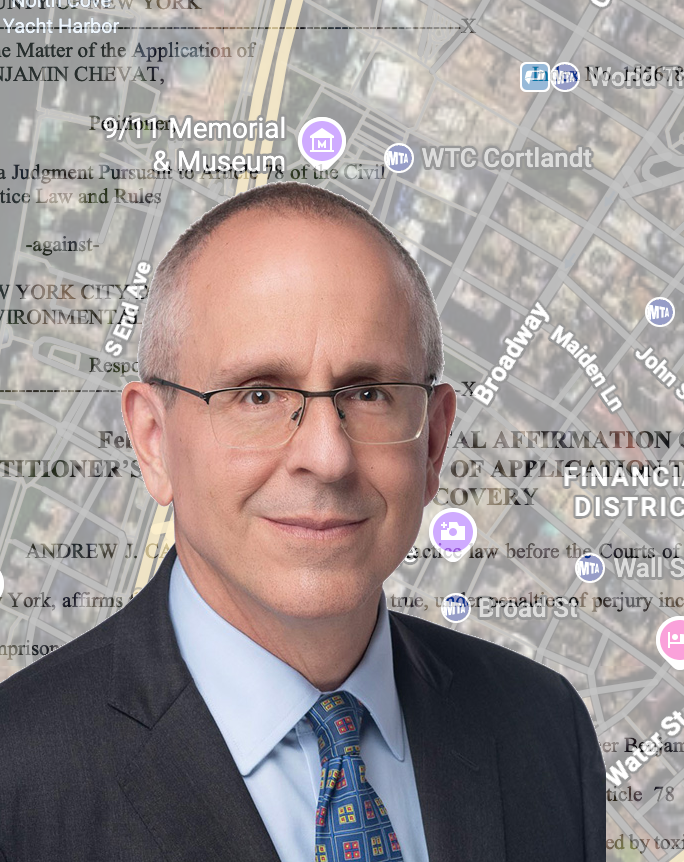
This January, while he was doing pro bono work for 911 Health Watch, a group advocating for the release of documents related to 9/11, he discovered the long sought-after "Harding memo". It turned up in a Texas archive, as reported by The Daily News.
The Harding memo is a document believed to have been circulated within the city government around October 2001, alerting the law department to possible lawsuits that could follow 9/11. It reveals the city's awareness of many health issues including toxic exposure, the lack of respiratory equipment for rescue workers, and the dangers of returning to the area too soon, which contradicts the narrative of safety pushed by former mayor Rudy Giuliani's administration.
A copy of the memo was found by Carboy in January through pure happenstance, but groups pushing to find out what the city knew and didn't tell the public around the time of 9/11, hope it's just one of many.
Andrew Ansbro, President of the city's Uniformed Firefighters Association, saw first-hand how 9/11 impacted the health of his friends and fellow firefighters.
Ansbro says his father was with Giuliani shortly after the buildings came down. According to Ansbro, his father, then chief of the NYPD transit division, was accompanying Giuliani at 75 Barclay St. and identified particles in the air.
"He basically told Giuliani, 'that stuff you see twinkling in the sunlight out there, that's asbestos,"' he said.
While Ansbro worked as a rescuer at the site, he was told to wear a respirator, but wasn't given one for weeks.
"And as soon as we got them, they immediately clogged up," he said.
"It never should have come to this," said Ansbro. "They should have been honest back then."
Many journalists in the city have tried to reveal what the city knew at the time of 9/11. One specific journalist's papers led to the memo.
Wayne Barrett, an investigative reporter for The Village Voice, wrote extensively on the accountability of Giuliani. He died in January 2017 and left a mountain of papers in his Brooklyn home.
"He had serious papers everywhere. I mean, the dining room table covered.
You couldn't eat there," said Council Member Gale Brewer, a close friend of the Barretts.
Fran Barrett, a coordinator for nonprofits with the governor's office, and Wayne's widow, wasn't sure what to do with his materials.
At some point, the University of Texas Briscoe Center for American History reached out to Fran for Wayne's collection, hoping to create an archive for the famed reporter.
"She told me," Brewer said, "University of Texas called her and called her and called her and called her. And finally she said, 'okay, take them'."
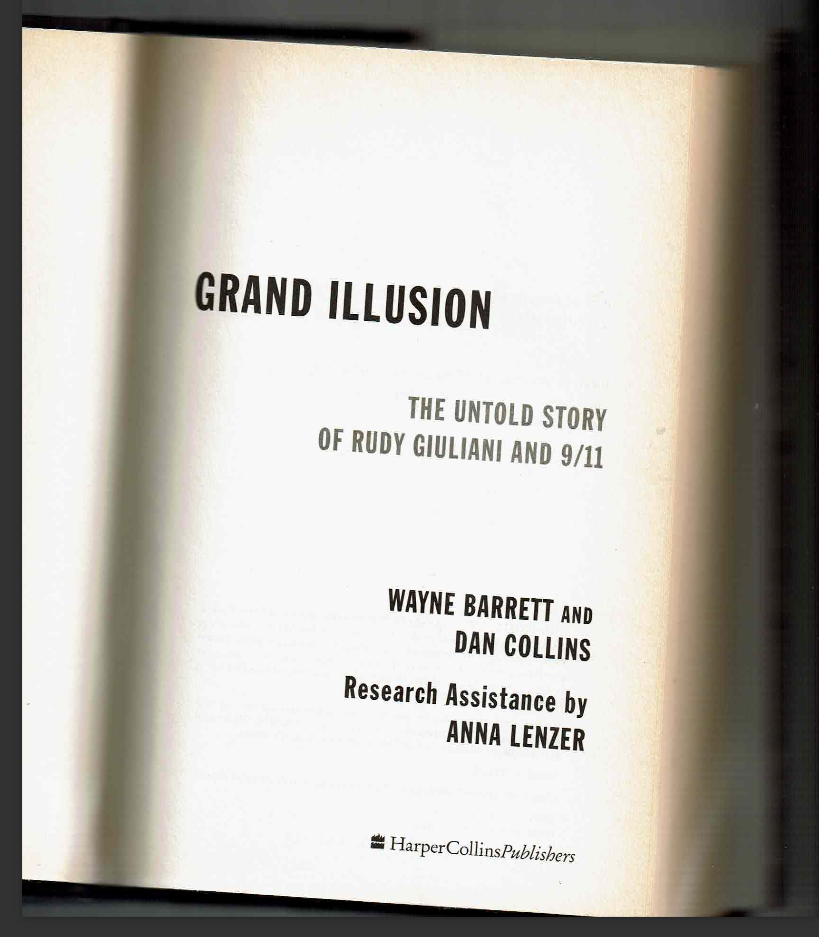
Wayne along with Dan Collins, a New York-based journalist known for his muckraking style, referenced the Harding memo in their book "Grand Illusion, The Untold Story of Rudy Giuliani and 9/11". Both were seasoned journalists. Barrett brought a veteran knowledge of the city's politics and a well-known commitment to accountability, and Collins lent his long experience at United Press International, CBS News, and personal history with Giuliani to the book. Collins died July 9, 2024.
But other journalists, politicians, attorneys, and activists had never seen the memo. No one was sure if reporters over the years had actually read it.
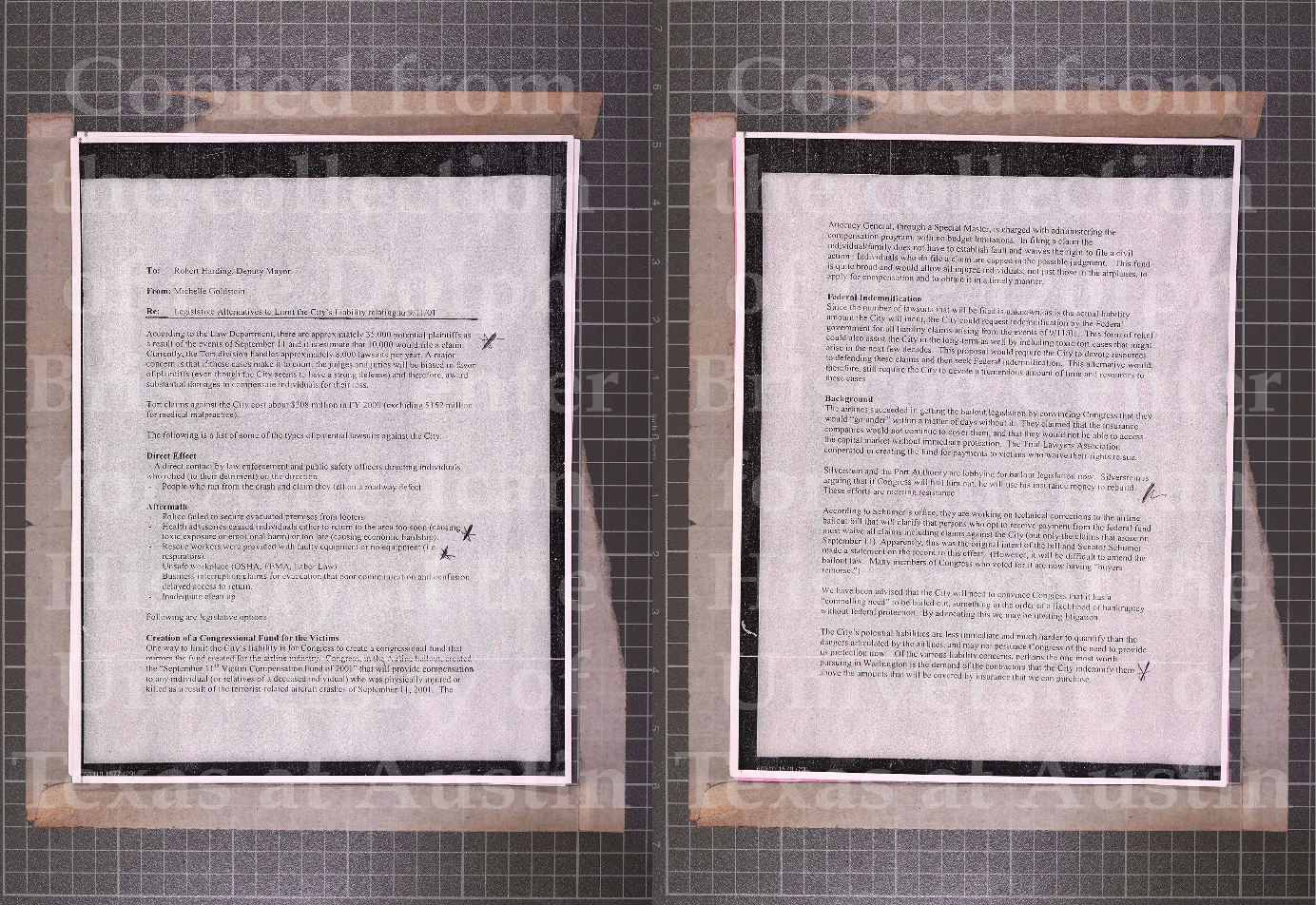
Getting the memo was easy. Carboy called the Briscoe Center for American History, they looked through Wayne's 300 boxes and found it. $20 later, Carboy had it.
But finding it took years. In the weeks following 9/11, Michelle Goldstein wrote the memo to Robert Harding. A month later, Congress passed the Aviation and Transportation Security Act, limiting New York City's total liability to $350 million, as suggested in the memo.
In 2007 Anthony DePalma, a reporter for the New York Times, referenced the memo in an article about Rudy Giuliani's tainted legacy. Then in 2024, when health issues from the aftermath were piling up, the memo came up again in a letter from Rep. Jerrold Nadler, D-N.Y., and Rep. Dan Goldman, D-N.Y. The letter was the second addressed to Mayor Eric Adams, hoping that he, as a former cop and first responder, would act to release the city's 9/11 files.
Adams met with members of Congress, then replied with a letter explaining that the city's maximum liability of $350 million kept it from taking on new law suits which releasing the 9/11 files would lead to.
"New York City cannot produce documents without expensive and expansive legal review," he wrote in the letter. "We are happy to work with your offices to determine potential federal funding sources" to release the documents, he said in the letter. He left office without releasing the files.
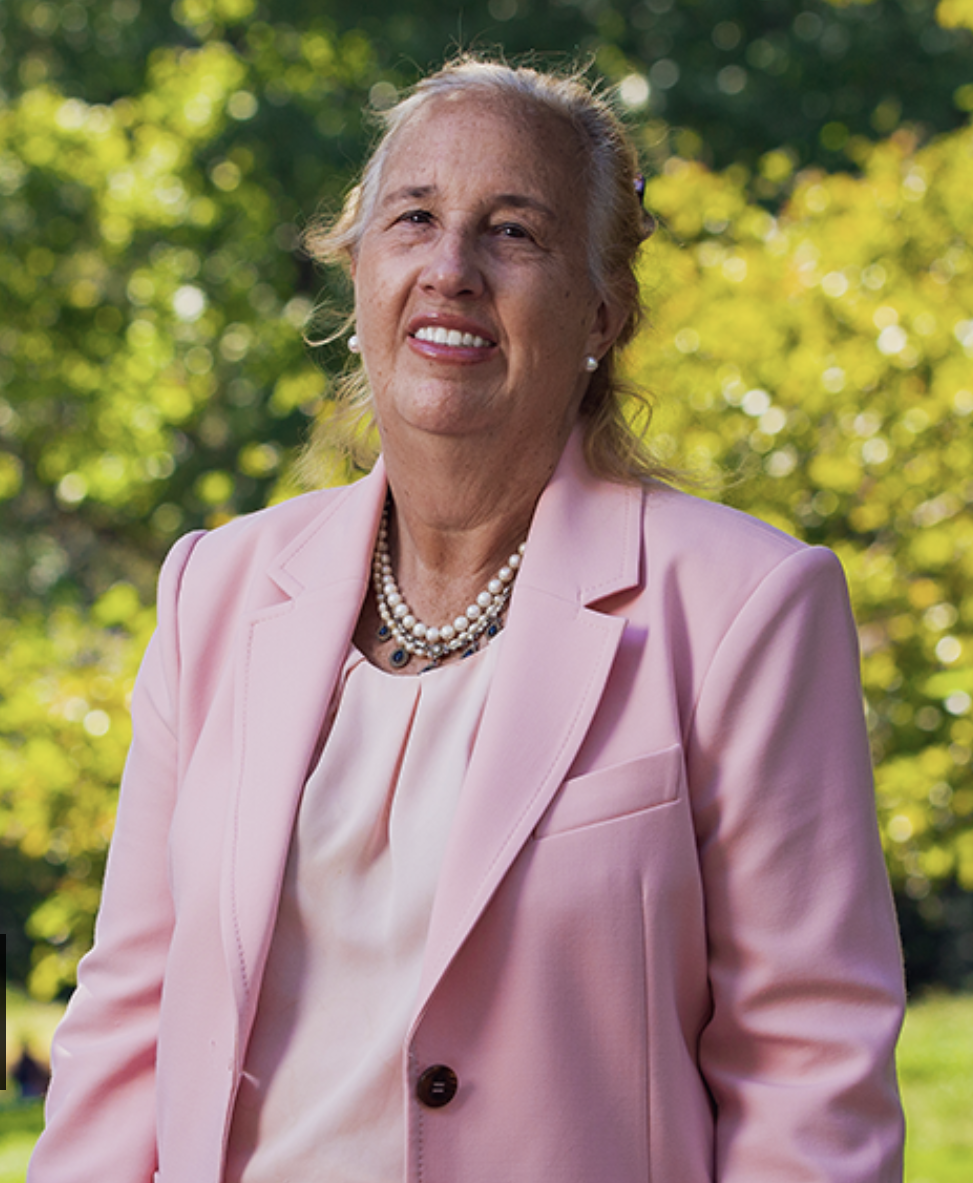
That September 2024, Council Member Brewer announced in a press release new legislation to "reveal what city government knew about environmental toxins produced by the September 11, 2001 attacks on the World Trade Center." Brewer's statement came after she realized the council could force the Department of Investigation to look into any agency, per city charter.
"This has never been done before," she said in an interview. "We didn't know."
The investigation got underway at the Department of Environmental Protection (DEP), the city's department in charge of the environmental safety of the city.
Before the investigation, the DEP had denied Attorney Carboy's FOIL requests for 9/11 related documents for years, claiming they didn't exist, according to documents from Case Index No. 155678/2024.
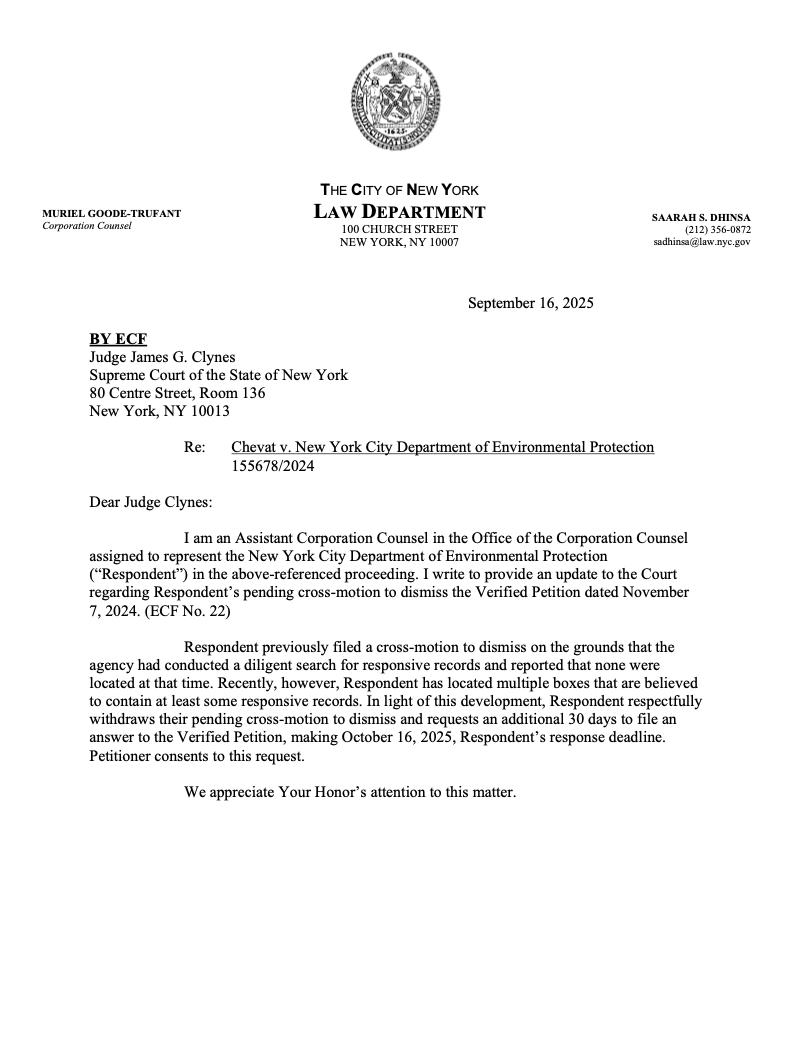
A year after the investigation started, the DEP found 32 boxes. Then they found more, totaling 68 boxes. The city's law Department referred Councilbeat.com to Corporation Counsel Steven Banks' testimony before city council when asked for comment. The DEP did not reply to a request for comment.
The discovery of the boxes changed the course of Carboy's FOIL case and allowed him to review them in search of the Harding memo and similar papers.
"Since November, we have been reviewing them, 20 to 25 boxes at a time," said Carboy. "We sit in a room, we are supervised, there are several lawyers looking at us, and we go through documents."
The boxes were full of old newspaper articles from the fall of 2001 and lots of largely inconclusive test records, according to Carboy.
"It's bazillions of pages of stuff like that," said Carboy. "We're looking for things like the Harding Memo."
But nothing like the Harding memo was found in the boxes.
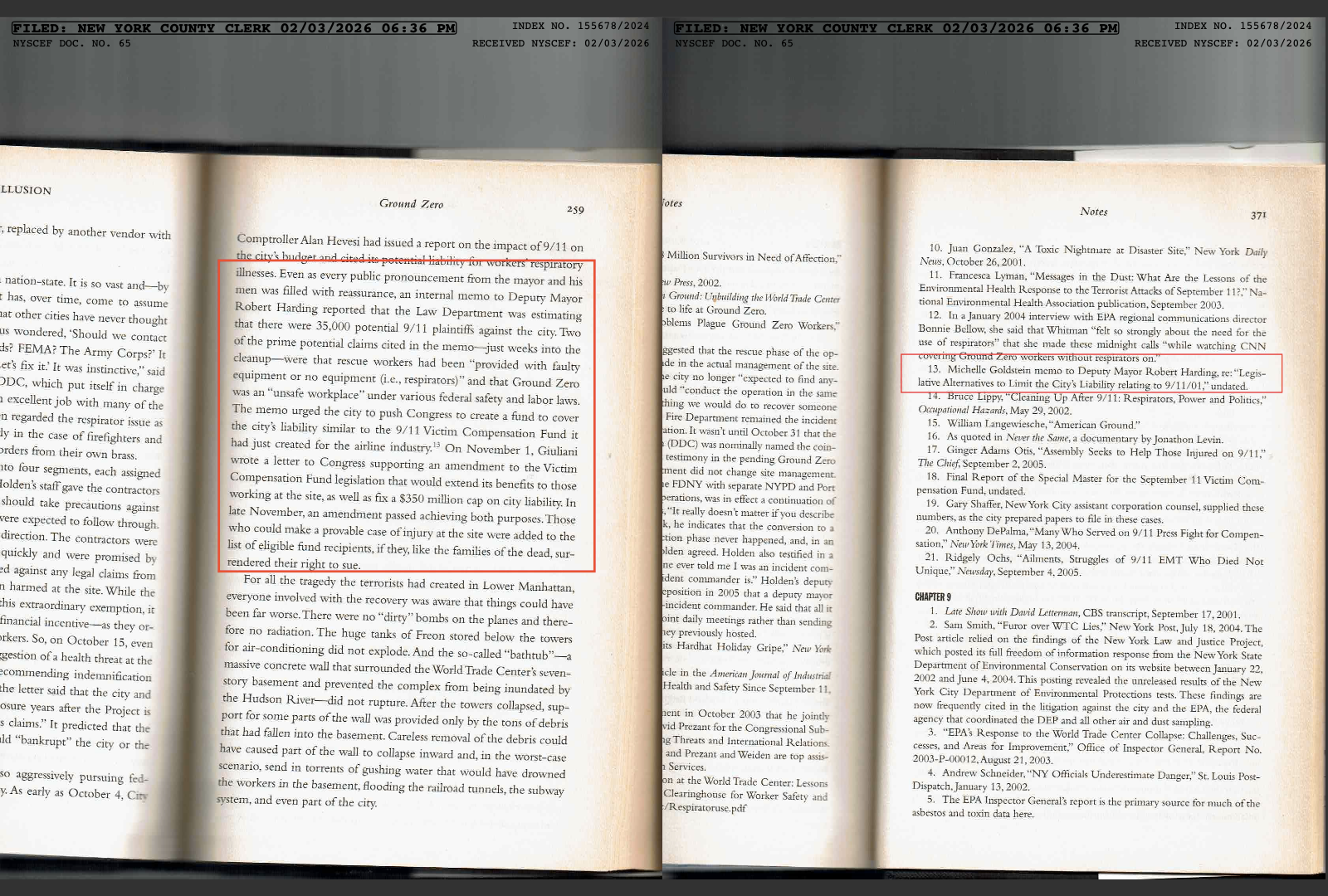
Around the fall of 2025, Carboy was browsing a copy of "Grand Illusion" that Barrett's office had sent him back in 2006, sharing his work while asking Carboy if they could review some deposition transcripts.
"I'm looking through this book, and I go to the index. I mean, this is how happenstance and kind of, casual it was. And sure enough, they reference Deputy Mayor Robert Harding," he said.
Carboy flipped to the page and noticed references to the same memo DePalma had mentioned in his New York Times article.
"And I'm thinking, well, did Wayne Barrett leave an archive? He did. And where is his archive? It's at the University of Texas in Austin," he said.
"I send them a copy of Barrett's book with a footnote," Carboy said. "'I don't know if you can help me. We're pro bono counsel to this not-for-profit. It would be very helpful to us if you could look for it.'"
The Briscoe Center searched through Barretts's 300 boxes of papers that once cluttered Fran's house. Some were labeled "9/11", others "real estate development".
Carboy did not expect them to find it.
"What's their motivation for actually finding this obscure document?" he said.
Six weeks later, they contacted Carboy. It was the end of January 2026. They had found it. The total was $20.
"This restored my faith in research libraries," he said. "And that's how we got the Harding memo."